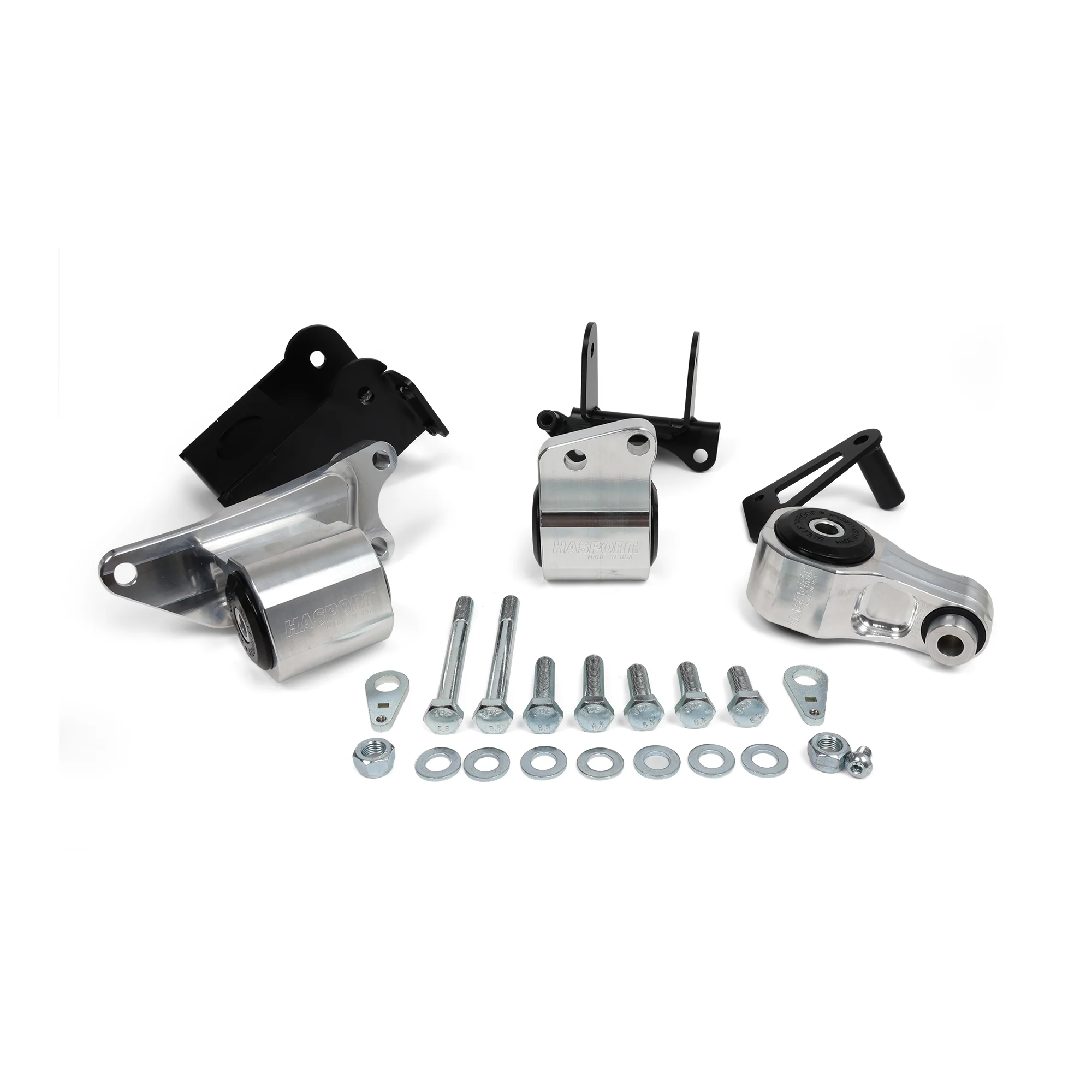



Gates B18B/B18C Timing Belt for 90-01 Integra/97-01 CR-V
- 300% Stronger Than Standard Belts
- Compatible with B18A, B18B, B18C, and B20 Engines
- Fitments for VTEC and Non VTEC Engines
- Ideal for High Horsepower Engines
- Description
- Vehicle Fitment
- Technical Data
- Included
- Install Guide
-
Every B-series Integra runs an interference engine. If your timing belt snaps, your valves meet your pistons and your weekend turns into an engine rebuild. The Gates Racing timing belt is the upgrade that actually matters here, whether you're maintaining a stock B18B1 daily, building an LS-VTEC for the track, or keeping a high-compression B18C5 Type R alive at 8,400 RPM.
Why the Gates Racing Belt Over OEM
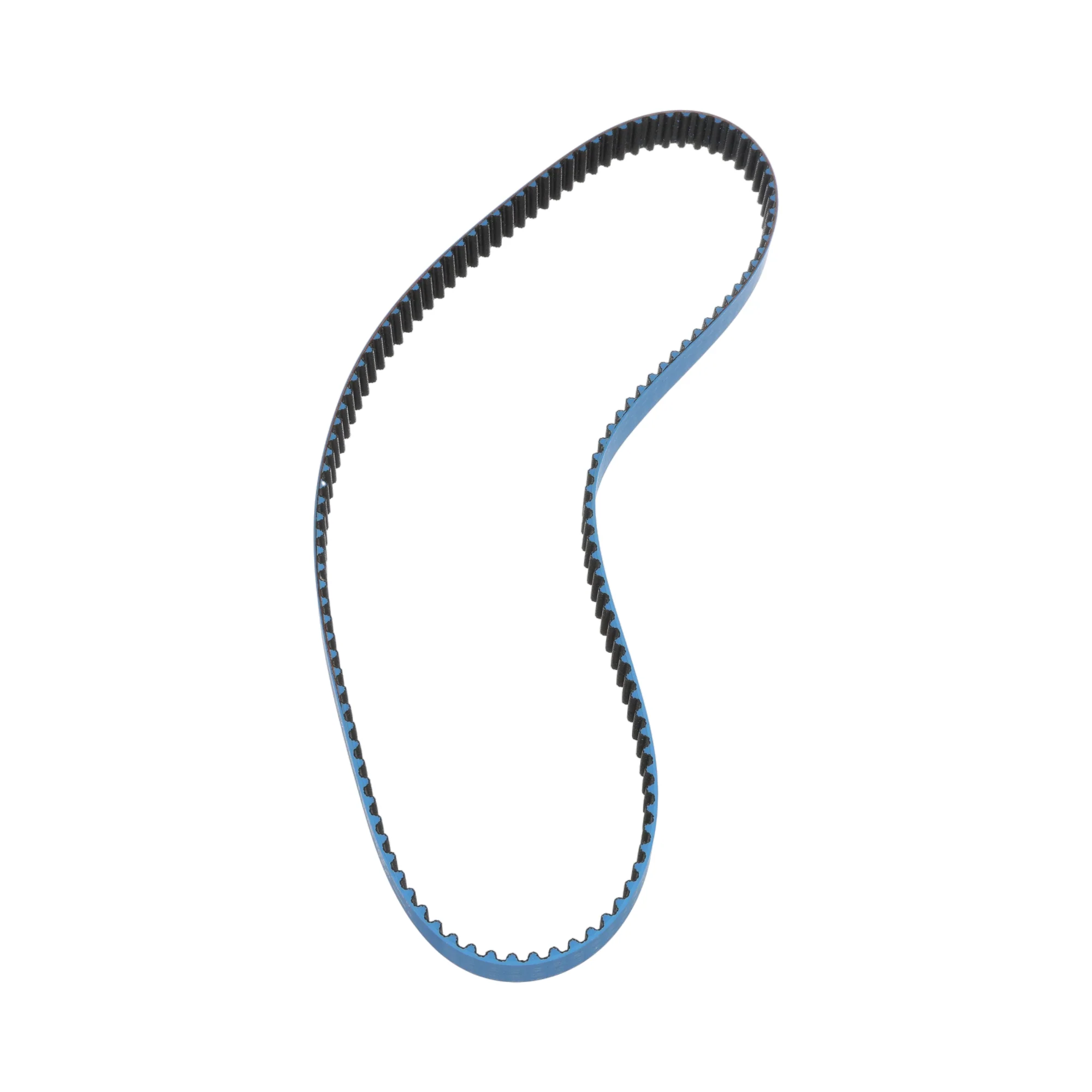
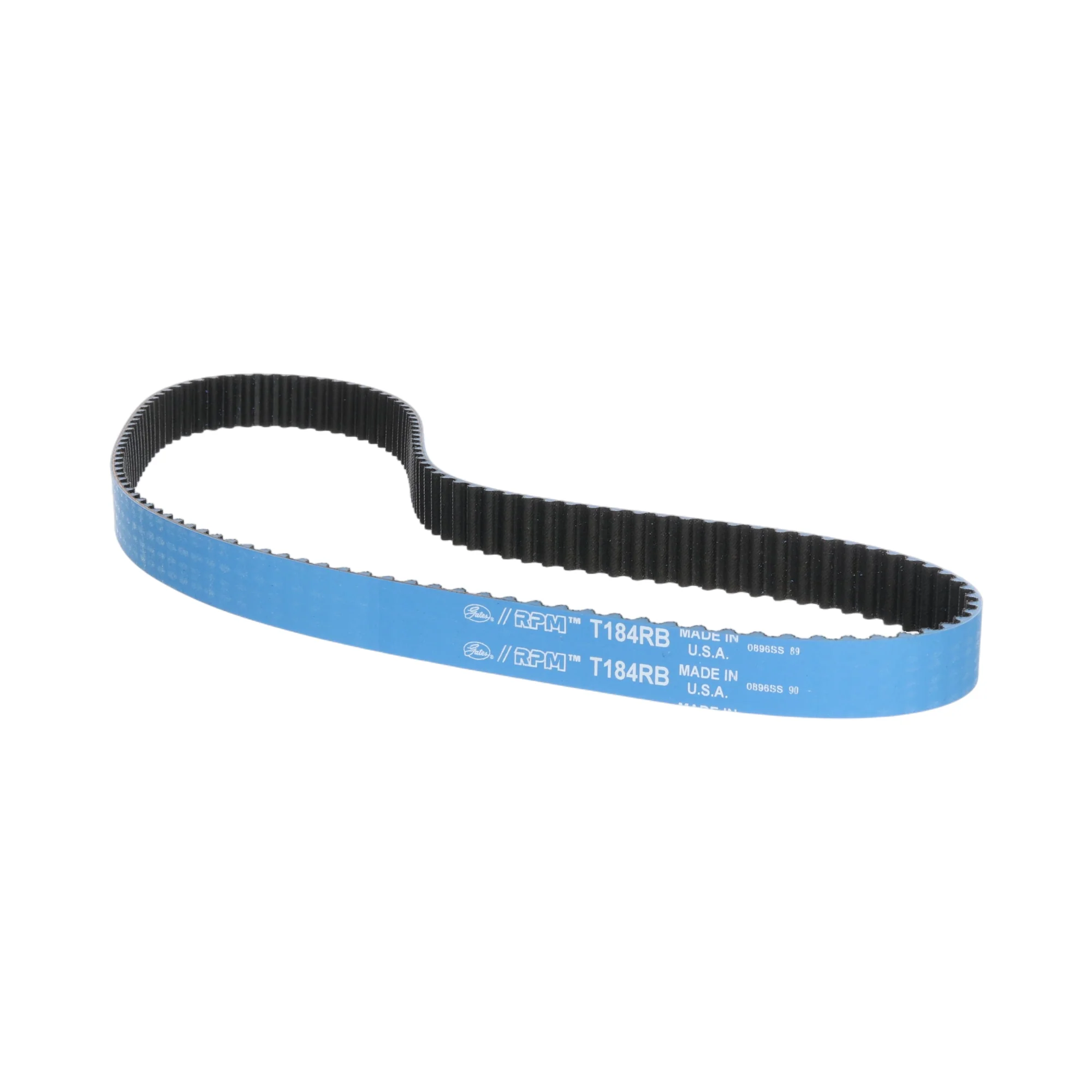
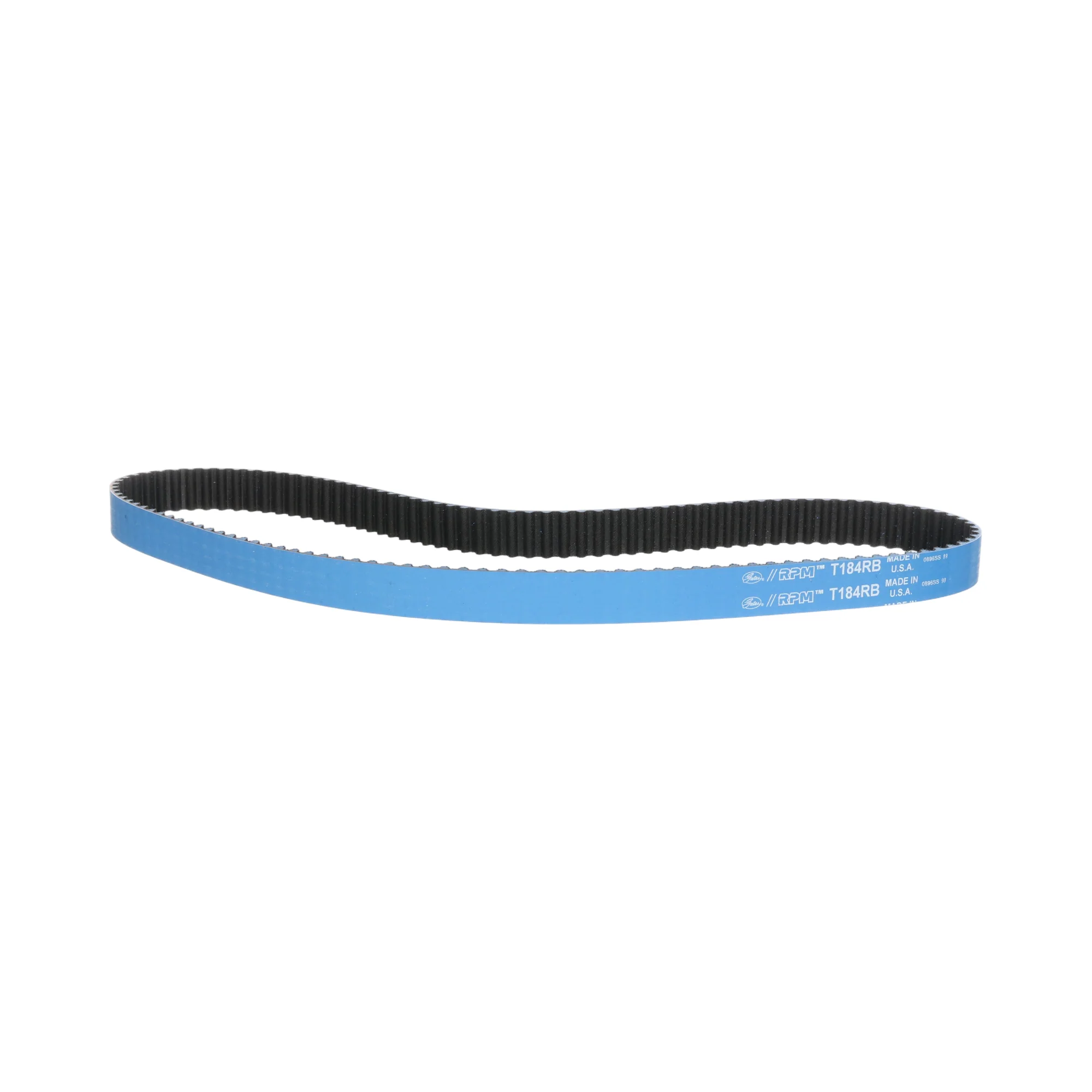
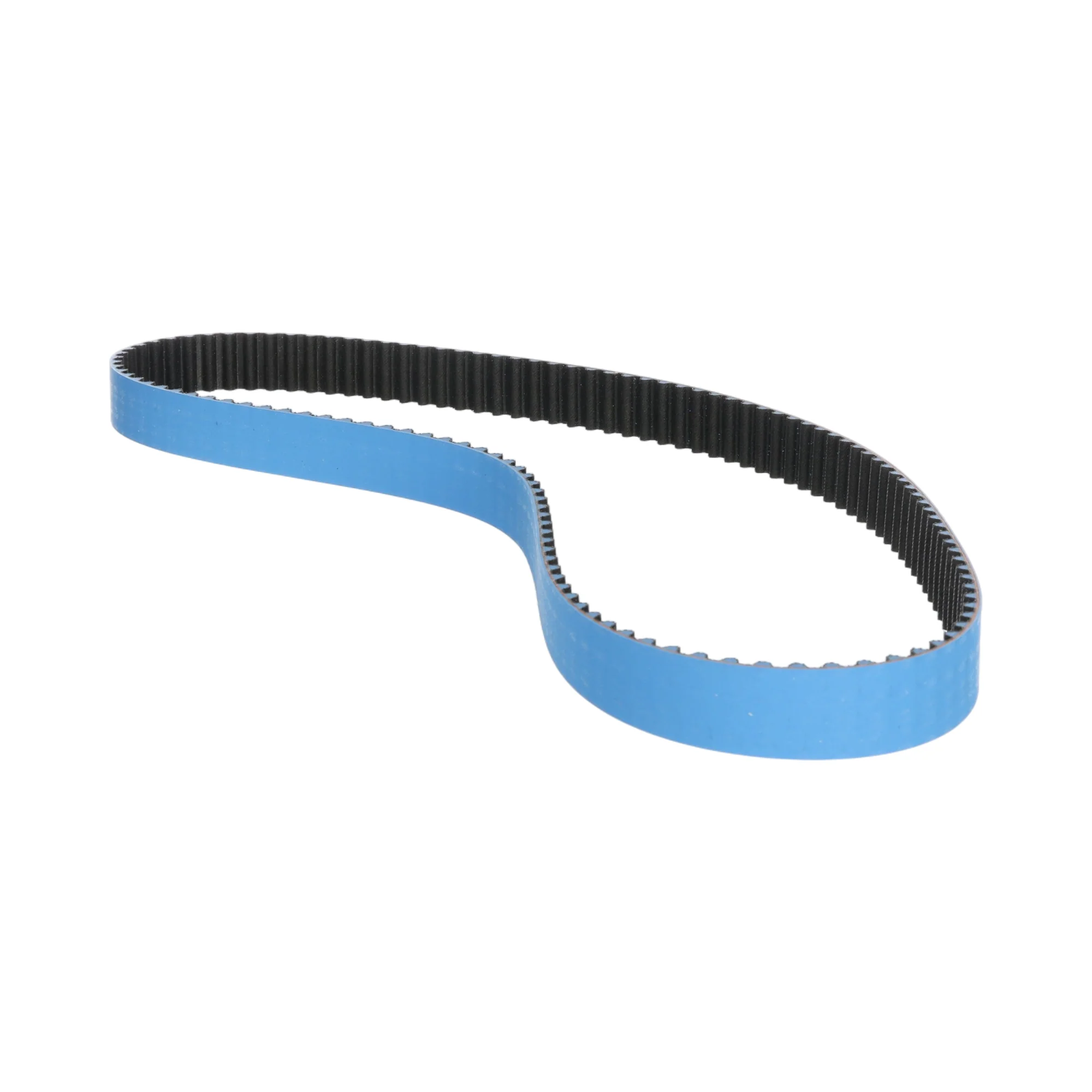
Here's something most people don't realize: Gates already manufactures the OEM timing belts that come in Honda and Acura parts boxes. The Racing series (the blue one) uses the same factory tooling and dimensional specs, then upgrades the materials. The compound is HNBR rubber instead of standard neoprene, with teeth reinforced by Aramid (Kevlar) and nylon fiber. In real terms, that means 300% more tensile strength and roughly three times the heat resistance of a stock belt.
Gates tested these at 6,000 RPM for over 2,000 continuous hours at 212°F before failure. A standard belt reaches its failure point at around 1,200 hours under the same conditions. If you're running higher-than-stock valve springs, aggressive cams, or sustained high RPM on track, that extra margin is where this belt earns its keep.
The belt is noticeably thicker and stiffer than OEM when you have both in hand. That stiffness means you may need to use a flathead screwdriver to lift the tensioner slightly during installation to get proper tension. With an OEM belt you can usually just rotate three teeth on the crank and snug the tensioner bolt. The Gates Racing belt doesn't always cooperate with that shortcut.
Specs
Brand Gates Racing Material HNBR elastomeric compound with Aramid/nylon fiber reinforced teeth Strength 300% stronger than standard aftermarket belts (per manufacturer) Heat Resistance 3x standard belt heat resistance (per manufacturer) Endurance 2,000+ hours at 6,000 RPM / 212°F (per manufacturer) Color Blue Weight 0.45 lb Available Options
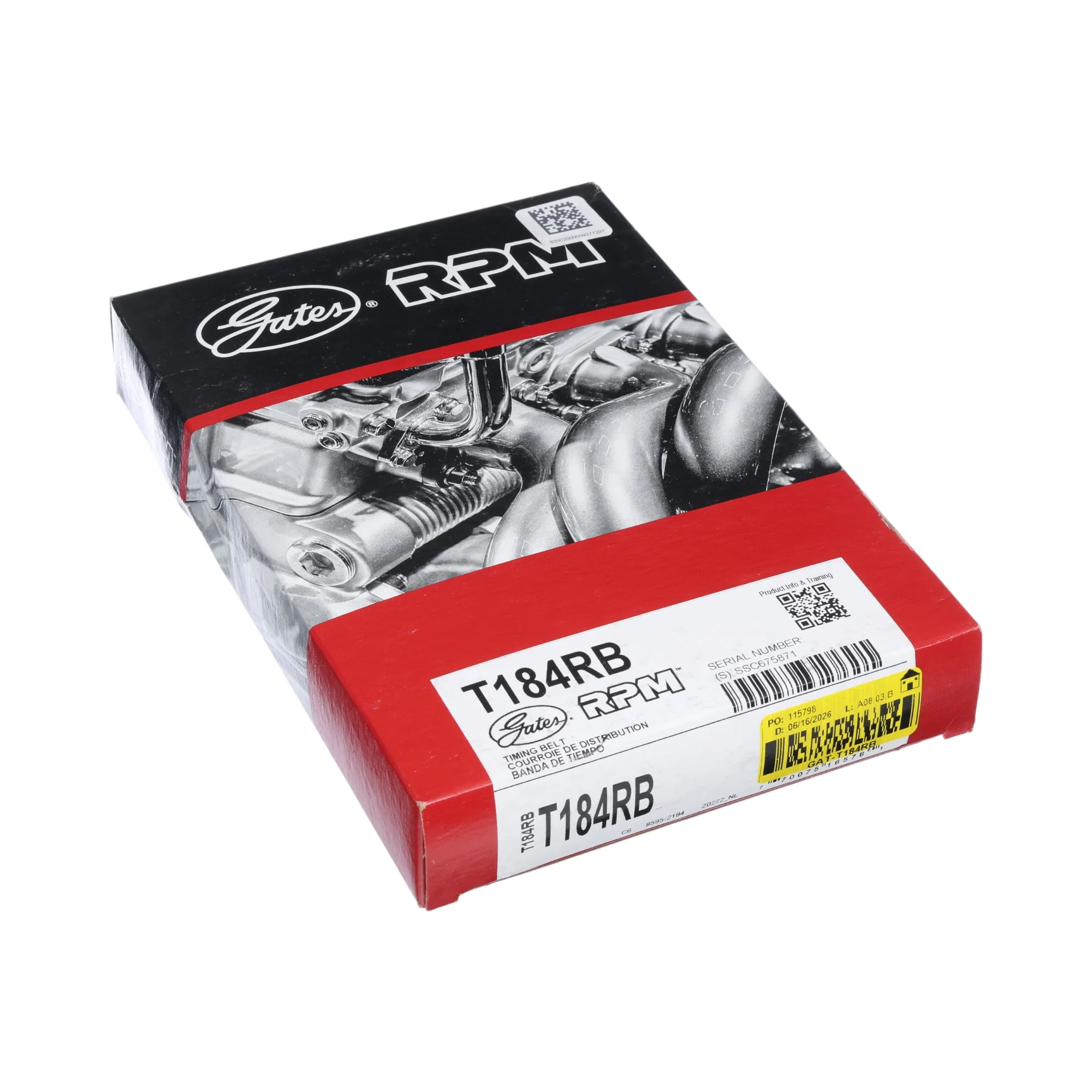
Engine Family SKU B18A1 / B18B1 / B20 (non-VTEC) GAT-T184RB B18C1 / B18C5 (VTEC) GAT-T247RB These are two different belts with different tooth counts. You must select the correct one for your engine. If you pick the wrong variant, it won't fit.
Gates Racing Timing Belt Fitment
Year Make Model Submodel Engine SKU 1990-1993 Acura Integra RS, LS, GS B18A1 GAT-T184RB 1994-2001 Acura Integra RS, LS, GS B18B1 GAT-T184RB 1994-2001 Acura Integra GS-R B18C1 GAT-T247RB 1997-2001 Acura Integra Type R B18C5 GAT-T247RB 1997-2001 Honda CR-V All B20B4 / B20Z2 GAT-T184RB The T247RB also works on LS-VTEC and B20-VTEC builds since those use a B18C or B16B VTEC head with the corresponding cam timing. If you're running a Frankenstein combo, match the belt to whichever head you're using, not the block.
What to Know Before You Buy
This is just the belt. You'll also want a new tensioner and water pump while you're in there, because getting to the timing belt means pulling the same covers and components you'd remove for both of those jobs. Doing the belt alone and then coming back for the water pump at 120k is doing the same labor twice. Most B-series builders replace all three together every 60,000 miles or so.
For a stock or mildly modified daily driver, the OEM Honda belt works perfectly fine. People have run them well past 100,000 miles without drama. The Gates Racing belt makes more sense if you're running aftermarket cams, heavier valve springs, sustained high RPM on track, or a boosted setup where the extra heat and stress load actually matter. It's not a night-and-day difference on a stock commuter, but it's cheap insurance on a built motor.
On install: set your crank to TDC, align your cam gear marks, and do not rotate the engine backward with the new belt on. B-series timing is straightforward but if you skip the alignment step you'll be pulling the covers again. The blue color makes it easy to mark with a paint pen or regular marker for timing reference, which is a small but real convenience over the black OEM belt.
-
1990-1993 Acura Integra GS/LS/RS
1994-2001 Acura Integra GS/LS/RS/Special Edition1994-2001 Acura Integra GS-R1997-2001 Acura Integra Type R
1997-2001 Honda CR-V
- (1) Timing Belt
Original: $492.83
-70%$492.83
$147.85Product Information
Product Information
Shipping & Returns
Shipping & Returns
Description
- 300% Stronger Than Standard Belts
- Compatible with B18A, B18B, B18C, and B20 Engines
- Fitments for VTEC and Non VTEC Engines
- Ideal for High Horsepower Engines
- Description
- Vehicle Fitment
- Technical Data
- Included
- Install Guide
-
Every B-series Integra runs an interference engine. If your timing belt snaps, your valves meet your pistons and your weekend turns into an engine rebuild. The Gates Racing timing belt is the upgrade that actually matters here, whether you're maintaining a stock B18B1 daily, building an LS-VTEC for the track, or keeping a high-compression B18C5 Type R alive at 8,400 RPM.
Why the Gates Racing Belt Over OEM
Here's something most people don't realize: Gates already manufactures the OEM timing belts that come in Honda and Acura parts boxes. The Racing series (the blue one) uses the same factory tooling and dimensional specs, then upgrades the materials. The compound is HNBR rubber instead of standard neoprene, with teeth reinforced by Aramid (Kevlar) and nylon fiber. In real terms, that means 300% more tensile strength and roughly three times the heat resistance of a stock belt.
Gates tested these at 6,000 RPM for over 2,000 continuous hours at 212°F before failure. A standard belt reaches its failure point at around 1,200 hours under the same conditions. If you're running higher-than-stock valve springs, aggressive cams, or sustained high RPM on track, that extra margin is where this belt earns its keep.
The belt is noticeably thicker and stiffer than OEM when you have both in hand. That stiffness means you may need to use a flathead screwdriver to lift the tensioner slightly during installation to get proper tension. With an OEM belt you can usually just rotate three teeth on the crank and snug the tensioner bolt. The Gates Racing belt doesn't always cooperate with that shortcut.
Specs
Brand Gates Racing Material HNBR elastomeric compound with Aramid/nylon fiber reinforced teeth Strength 300% stronger than standard aftermarket belts (per manufacturer) Heat Resistance 3x standard belt heat resistance (per manufacturer) Endurance 2,000+ hours at 6,000 RPM / 212°F (per manufacturer) Color Blue Weight 0.45 lb Available Options
Engine Family SKU B18A1 / B18B1 / B20 (non-VTEC) GAT-T184RB B18C1 / B18C5 (VTEC) GAT-T247RB These are two different belts with different tooth counts. You must select the correct one for your engine. If you pick the wrong variant, it won't fit.
Gates Racing Timing Belt Fitment
Year Make Model Submodel Engine SKU 1990-1993 Acura Integra RS, LS, GS B18A1 GAT-T184RB 1994-2001 Acura Integra RS, LS, GS B18B1 GAT-T184RB 1994-2001 Acura Integra GS-R B18C1 GAT-T247RB 1997-2001 Acura Integra Type R B18C5 GAT-T247RB 1997-2001 Honda CR-V All B20B4 / B20Z2 GAT-T184RB The T247RB also works on LS-VTEC and B20-VTEC builds since those use a B18C or B16B VTEC head with the corresponding cam timing. If you're running a Frankenstein combo, match the belt to whichever head you're using, not the block.
What to Know Before You Buy
This is just the belt. You'll also want a new tensioner and water pump while you're in there, because getting to the timing belt means pulling the same covers and components you'd remove for both of those jobs. Doing the belt alone and then coming back for the water pump at 120k is doing the same labor twice. Most B-series builders replace all three together every 60,000 miles or so.
For a stock or mildly modified daily driver, the OEM Honda belt works perfectly fine. People have run them well past 100,000 miles without drama. The Gates Racing belt makes more sense if you're running aftermarket cams, heavier valve springs, sustained high RPM on track, or a boosted setup where the extra heat and stress load actually matter. It's not a night-and-day difference on a stock commuter, but it's cheap insurance on a built motor.
On install: set your crank to TDC, align your cam gear marks, and do not rotate the engine backward with the new belt on. B-series timing is straightforward but if you skip the alignment step you'll be pulling the covers again. The blue color makes it easy to mark with a paint pen or regular marker for timing reference, which is a small but real convenience over the black OEM belt.
-
1990-1993 Acura Integra GS/LS/RS
1994-2001 Acura Integra GS/LS/RS/Special Edition1994-2001 Acura Integra GS-R1997-2001 Acura Integra Type R
1997-2001 Honda CR-V
- (1) Timing Belt